Résumé
Engineer, inventor, designer, entrepreneur, and all-around nerd based in Munich, Germany.
During my 10+ years of experience in medical device research and development, I've worked on 30+ products with over 20 companies. I have a track record for innovation demonstrated by my invention of several new therapeutic and diagnostic devices, including a new class III device for brain cancer that raised $16M in series A financing.
Experience
Senior Product Architect
2026 – PresentSenior Product Owner
2022 – 2025- Led a cross-functional team to reduce customer complaints by improving the stability of a legacy photoacoustic imaging system
- Led usability engineering process for two photoacoustic imaging systems following FDA guidance and IEC 62366-1
- Developed a low-cost VCSEL-based photoacoustic imaging prototype and presented findings at Photonics West (San Francisco, CA; January 2025)
Owner
2021 – 2022Journeywork Product Design is a design consultancy helping medical device companies launch new products. We help our clients find new medical device markets, research the market needs, develop new products, craft regulatory/reimbursement strategies, develop prototypes, and much more.
- Designed novel ultrasonic transducers and simulated them with commercial acoustic FDTD solvers
- Developed generative transducer design software with custom, high-speed acoustic design and simulation code written in Julia
- Designed and installed a chemical material-handling system for a clinical diagnostics start-up
Innovation Fellow
2020 – 2021- Identified unmet medical needs through healthcare utilization and voice of customer (VOC) research
- Conducted over 50 interviews with customers to refine value proposition design
- Led brainstorming to generate new solutions to treat unmet medical needs guided by VOC input
- Prototyped three novel medical devices
- Crafted grants, intellectual property disclosures, study protocols, and prototypes
Chief Technology Officer
2017 – 2020- Invented a non-invasive modality for treating aggressive brain cancers that led to $16M in funding from OrbiMed
- Prepared engineering documentation for an FDA presubmission meeting
- Led engineering reviews with new and existing investors
- Designed and executed product development strategy, including regulatory and intellectual property strategy
- Designed and conducted in vitro and in vivo experiments, including creating experimental apparatuses
- Managed a team of experts to design and simulate a novel ultrasound transducer
Biomedical Engineer
2015 – 2017- Orchestrated user research, including contextual inquiries, design ethnographies, and formative usability studies
- Designed and prototyped new medical device systems
- Developed and executed feasibility and product performance experiments
Education
Biomedical Engineering, BS, cum laude
2009 – 2013- Minor in Electrical Engineering
- Alpha Eta Mu Beta — Biomedical Engineering Honor Society
- Tau Beta Pi — Engineering Honor Society
Skills
- Design automation
- VOC and user research
- Value proposition design
- Leading ideation
- Project communication
- 3D printing
- Rapid prototyping
- SolidWorks, OnShape
- Julia, Python, MATLAB
- System modeling and simulation
Patents & Applications
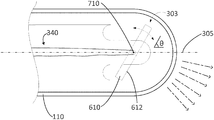
Basket for a multi-electrode array catheter (US10932723B2, filed May 8, 2018)
An electrophysiology catheter is provided. In one embodiment, the catheter includes an elongate, deformable shaft having a proximal end and a distal end and a basket electrode assembly coupled to the distal end of the shaft. The basket electrode assembly has a proximal end and a distal end and is configured to assume a compressed state and an expanded state. The electrode assembly further includes one or more tubular splines having a plurality of electrodes disposed thereon and a plurality of conductors. Each of the plurality of conductors extends through the tubular spline from a corresponding one of the plurality of electrodes to the proximal end of the basket electrode assembly. The tubular splines are configured to assume a non-planar (e.g., a twisted or helical) shape in the expanded state.
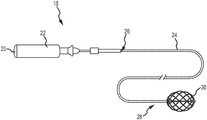
Active detection of sensor transition from covered to exposed (US9724014B2)
An introducer may comprise a shaft and a proximal electrode. The shaft may have a proximal end portion and an interior lumen, the interior lumen configured to receive a catheter therethrough. The proximal electrode may be coupled with the proximal end portion and may be configured to act as an electrical source or sink so as to create an electrical field within the interior lumen. A position of an electrode coupled with the catheter may be determined according to the electrical field.
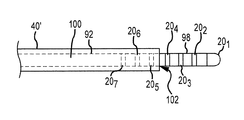
Laplacian and Tikhonov regularization for voltage mapping with a medical device (US10049771B2)
An embodiment of a method for solving the inverse problem of electrophysiology and determining a voltage distribution on a surface of a tissue may comprise receiving a plurality of voltages collected by a plurality of electrodes adjacent to the surface, discretizing the problem using a Finite Element Method (FEM) or a Boundary Element Method (BEM), introducing one or more regularization terms to an error minimization formulation, and solving, by a processor, the voltage distribution according to the plurality of voltages and according to the regularization terms. The regularization terms may comprise one or more of a Laplacian smoothness operator, a Tikhonov regularization matrix, a confidence matrix, and a linear operator that interpolates the plurality of electrode voltages to the tissue voltage distribution.
Spirometer system and methods of data analysis (US9706946B2)
The present disclosure relates to an electronic spirometer that empowers users to quantitatively track and proactively manage respiratory diseases via simple integration with mobile devices, tablets, and computers. In one aspect, patients will be able to connect with their doctors to determine medication dosage and efficacy, avoid environmental triggers, and prevent attacks and exacerbations.
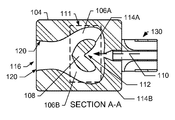
Biomaterial collection method (US11317898B2)
Apparatus and assemblies for automated sterile collection of urine and other biomaterials for medical testing, law enforcement testing, etc. Individual sample collection cartridges include an inflatable collection conduit and an inflatable collection vessel. The collection vessel can be sealed in multiple locations in a chronologically sequential manner to segregate an initial or "dirty" portion of a urine stream.
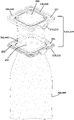
Methods and apparatus for guiding medical care based on sensor data from the gastrointestinal tract (US11406320B2)
The present invention is a gastric residual volume (GRV) measuring device and methods which determine the volume of gastric content by introduction of at least one additive component (a GRV indicator) that is dispersed and then changes a physical (chemical, electrical, thermal, mechanical, optical, etc.) characteristic within the stomach contents by a measurable degree.
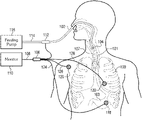
Methods of using planar acoustic waves for non-invasive sonodynamic therapy (US11730980B2, filed August 11, 2021)
This disclosure relates to a broadly applicable technology platform for treating lesions using sonodynamic therapy — devices, systems, and methods for treating tumors and cancer in body parts using sonodynamic therapy, a proposed form of treatment using drugs that only become cytotoxic upon exposure to ultrasound, offering deeper tissue penetration than photodynamic therapy.
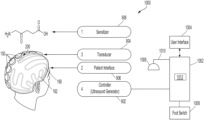
Incoherent field sonodynamic therapy for treating cancer (US12097392B2, filed June 28, 2023)
Methods and apparatuses for generating ensonification drive patterns using ultrasound transducer arrays for initiating and enhancing treatment of cancer with sonodynamic therapy, utilizing non-focused, low-intensity dispersed ultrasound to activate sonosensitizers that produce cytotoxic effects in cancer cells.
Ultrasound arrays for enhanced tissue therapy (US20250345635A1, filed May 25, 2023)
Ultrasound transducer arrays are provided to initiate and enhance therapeutic treatments with a normalized, randomized, and/or incoherent acoustic pressure field. Optimizing pressure uniformity throughout the incoherent pressure field, and maximizing the volume of that incoherent field, may be achieved through controller filtering steps to assign unique element waveform phases for each element in the array. Ultrasound may be used alone to activate a drug, pro drug, sonosensitizer, and/or microbubble additive, and can be combined with other energy (e.g., radiation, magnetism), for treatments including cancer, neurological disease, mood condition, sleep apnea, inflammation, and/or orthopedic diseases, and opening the blood brain barrier to improve access to the drugs and additives.
Detachable magnet device (US11915862B2, filed August 25, 2022)
A device for attachment to a surface of a ferromagnetic object and for holding an item near the surface, including: a base with a frame and grip portion, the grip portion coupled to the frame at the rear side and having an outer surface for gripping the surface; a magnet-retaining portion pivotally connected to an end of the frame; a magnetic device connected to the magnet-retaining portion and having an outer surface displaced frontwardly from the outer surface of the grip portion; a cover pivotally connected to another end of the frame, the cover including a lifter configured to contact an end of the magnet-retaining portion and cause it to pivot when the cover is lifted, moving the magnetic device in a rear-to-front direction; and an item-holding portion.
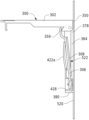
Detachable magnetic mounting systems, devices and methods (US12537122B2, filed August 24, 2023)
A mounting device for attaching a device to an attachment object, including: a magnet portion on a magnet-retaining portion; a mount-attachment portion configured to attach to the attachment object, the mount-attachment portion including a ring-shaped cam defining a cam surface with a cam profile having a variable height; and a base portion defining a channel for receiving the ring-shaped cam and defining a central opening for receiving the magnet portion, the base portion rotatable relative to the mount-attachment portion and including a grip surface. Rotation of the base portion relative to the attachment portion causes an end of the magnet to move away from the grip surface.
Detachable magnetic holding device (US12512244B2, filed August 24, 2023)
A detachable magnetic device includes a body portion, a levering cover, a magnet-retaining portion, a magnet, and a grip material. A cam portion of the levering cover is pivotally connected to an end of the body portion. The magnet is coupled to the magnet-retaining portion and disposed within a magnet-receiving opening surrounded by the grip material. The magnet is configured to magnetically couple the device to a ferromagnetic object, and the cam portion is configured to contact the object's surface when the levering cover is rotated to release the device.
Leverless detachable magnetic hook (US12567525B2, filed August 24, 2023)
Leverless magnetic hook devices including a body portion, a hook portion, a magnetic-retaining portion, and a magnetic device. The hook portion extends from a first surface of the body portion, and the magnetic device is coupled to the magnet-retaining portion such that a portion of its surface extends substantially parallel to and is recessed a distance D from the body portion's opposing surface. In this way, the magnetic device is configured to magnetically couple the hook device to a ferromagnetic object.
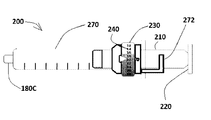
Weight-based dosing syringe (US2017/0095615)
A system includes a syringe barrel, a syringe plunger, and an annular collar. The syringe plunger has a cap on a first end, a piston on a second end configured for disposition in the barrel's bore, and a body with an external thread and a visible calibration indication. The annular collar has at least one interrupted internal thread segment with elasticity such that in a first state, the internal thread engages the external thread, and in a second state — when a compressive force is exerted on opposing sides of the collar — the internal thread disengages, allowing the plunger to move freely.
Tissue treatment with sensitizer and light and/or sound (US2021/0236862)
A catheter is disclosed that may be used in a minimally invasive internal treatment (e.g., sonodynamic therapy). The catheter can include a housing, a portion of which may be positioned in contact with internal tissue of a patient during a minimally invasive sonodynamic or photo-sonodynamic therapy procedure. The catheter may include multiple electrically independent ultrasound transducers configured to emit ultrasound energy into the internal tissue, reaching a target tissue depth at a relatively low temporal average intensity, which may activate the sensitizer.